

The Dangerous Clarity of Truth
- Sep 20, 2025
- 3 min read
Humans are the only species that kills each other over ideas.
We don't fight merely for territory, resources, or mates, we wage war over concepts, beliefs, and interpretations of reality that exist nowhere but in our minds.
Over truths
Or perceived truths
This uniquely human capacity for ideological violence stems from our most distinguishing trait: our reverence for truth.
We don't just want to understand the world, we crave absolute certainty about it.
We demand answers that are universal, permanent, and unquestionable.
We can not tolerate that.
Yet this hunger for truth, however innate, represents one of humanity's most dangerous impulses.
The very thing that should illuminate reality often obscures it, and the pursuit of absolute truth breeds the conflicts it promises to resolve.
Truth occupies an impossible position in human society.
We cannot function without shared understandings of reality, yet the moment we treat those understandings as absolute rather than provisional, or relative, they transform from tools of cooperation into weapons of division.
Our need for shared truth stems from our fundamental nature as social creatures.
Humans survived and thrived by coordinating their actions, which required agreeing on basic facts about their environment.
Is that rustling bush hiding a predator?
Which berries are safe to eat?
Where can we find water?
These questions demanded consensus, and the groups that developed more accurate shared truths had significant survival advantages.
This evolutionary heritage explains why we feel such discomfort when confronted with conflicting versions of reality.
Our brains are wired to seek agreement, to find the common ground that enables collective action.
In small, homogeneous groups, this worked reasonably well. But in complex, diverse societies, the quest for consensus often becomes a quest for dominance, one group's truth prevailing not through superior evidence, but through superior power.
The pursuit of consensus, however noble its intentions, carries inherent dangers.
It can encourage groupthink, where the comfort of agreement becomes more important than the accuracy of beliefs.
It can silence dissenting voices, mistaking uniformity for unity.
Most dangerously, it can convince us that because many people share our beliefs, those beliefs must be universally true rather than simply popular within our particular community.
The certainty that justified the first arrest, the first book burning, the first execution was indistinguishable from the certainty that drives scientific discovery or moral progress.
The difference lies not in the feeling of certainty, but in how we respond to that feeling, and how widely it is agreed upon.
Contemporary examples abound. Climate change denial, vaccine hesitancy, political polarization—all symptoms of competing truth claims, each backed by communities that provide social validation and epistemological certainty. The people who reject mainstream consensus aren't necessarily less intelligent; they're operating within different frameworks for determining what counts as reliable evidence.
Perhaps the deepest truth about truth is that it cannot be possessed, only pursued.
The moment we claim to have captured it completely, it slips away, leaving us holding rigid dogmas that obscure rather than illuminate reality.
When we approach truth as an ongoing conversation rather than a final destination, it becomes a source of connection rather than division.
In a world where information travels instantly and societies grow increasingly complex, the ability to navigate multiple perspectives may be the most essential skill we can develop.
Truth matters too much to be left to the certainty of any single perspective.
But, you want my opinion?
We are not ready to handle the truth.
We are not equipped.
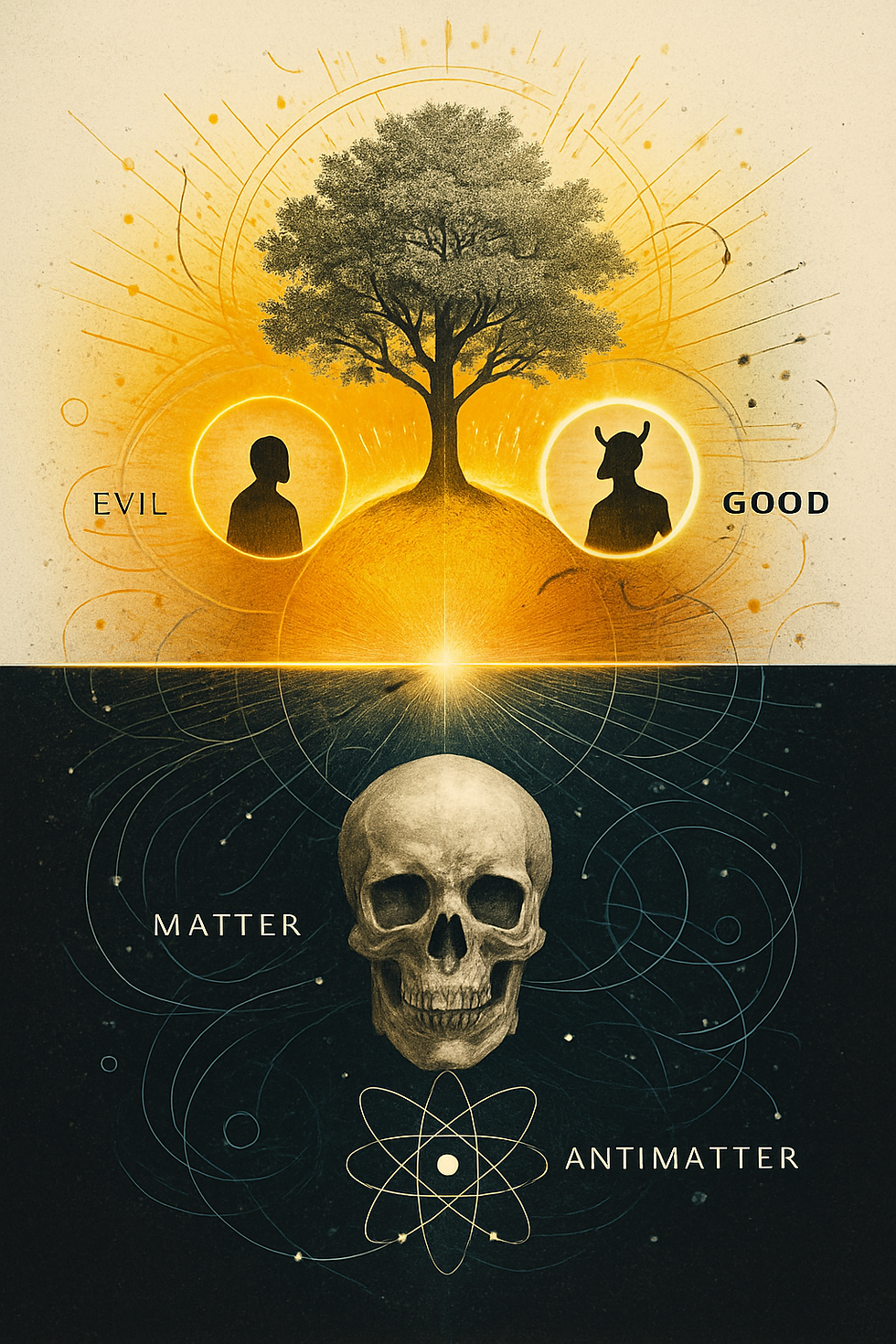
The single omniscient indelible indisputable and only truth that has ever been and will ever be is that we are all going to die one day.
Right?
How are we dealing with that?
How are we accepting that?
This is my opinion.


Comments